
There is the Christmas tree shining into the grey lane. Home is warm and carpeted, with bedside lamps turned on, as always. When I was a child the gentle slump of the car in the drive would always be a bit of a bother.
“We’re home.”
I’d be half asleep in the backseat, sighing in tune with the silencing of the radio. Soon I’d have to wriggle out of the car onto the cold pavement: a bitter interlude between warm car and warm home. I was a sleepy child, always lulled to sleep by short journeys and cassette tapes. My sister used to taunt me for it – she still does. Even now, home provokes a drowsy knowingness that London tries its best to shake out of me. Here, there is a new puppy, and ironed bed linen and fields and fields of Suffolk somewhere beyond my window.
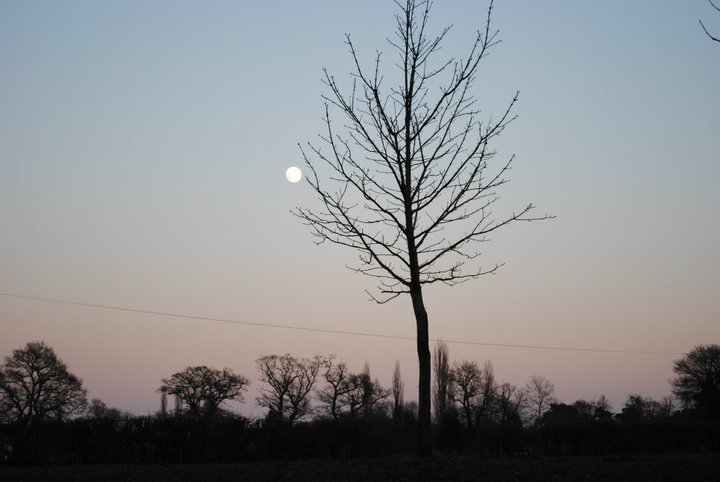
The town of Bungay clings to our house. I type to the thrashings of rain and perhaps it’s because our lane is silent and my room is warm, but it runs streams into the darkness and I imagine the glow of the pub on Bridge Street. During the day, there is the stillness of a florists with wreathes decorating the pavement; the stillness of the Catholic church – the churchyard always misty and moss grown; the stillness of the butchers, the bakers, and a steady supply of antique shops. I suppose Bungay unboastfully, unknowingly, has everything tucked away somewhere. The only problem is it’s so easy to forget to look.
When I was fifteen I worked every Saturday morning in the local greengrocers. It was cold and I was constantly wrapped up in knitwear and books about vegetables. One day an elderly woman listened to my plans of escaping to London, to which she responded with a surprisingly motivating string of cliches, “Go! Explore! Remember that Bungay will still be here when you come back.”
I guess that’s the drowsy comfort in coming home, and the reminder to keep moving. After all, I couldn’t allow myself to quietly stagnate here, not in the Bungay of my youth.

 To The Table